Rethinking the Dome for Year-Round Outdoor Hospitality
What does it take to build a structure that can withstand some of the world's most challenging environments? For MarsDome, the answer starts with a simple philosophy: build it to last, keep it simple, and design for the realities of the field.
Eric Chen is the founder of MarsDome. Starting out in 2014, MarsDome began with an unexpected opportunity that sparked a much bigger vision: rethinking what a dome could be. Through years of engineering, product development, and collaboration with operators, the company developed its nine-panel composite insulated dome, designed to bring greater durability, comfort, and year-round performance to outdoor hospitality.
From projects in Mongolia to remote locations in Northern Canada, MarsDome's journey has been shaped by the people and environments that put its structures to the test. In this AGA Member Spotlight, discover the thinking behind the brand, the lessons learned along the way, and how a commitment to continuous improvement is helping shape the next generation of glamping accommodations.
What inspired the name of your company? Is there a story or meaning behind your company’s name? How does it reflect your brand or values?
We named the brand after the hardest environment we could think of. Mars is remote, cold and unforgiving: no grid, no resupply runs, no room for a shelter that needs constant attention. That became the standard we build toward here on Earth — domes for places where the structure has to keep working through winter after winter with as little upkeep as possible. So the name is both a description and a promise: it keeps every design decision pointed at stable, long-term living in extreme environments. Our domes have gone into exactly those kinds of places, from Mongolia to Northern Canada, and the name is the bar we keep holding ourselves to.
What is your role within the company?
I am the founder and the inventor of the MarsDome structure. I started the business in 2014 and I am still in the middle of the product — panel design, engineering decisions, and the details that decide whether a dome performs in the field. The role has not really changed since day one: I build the thing, and I answer for how it behaves in every place it is installed.
How long has your organization been operating?
Our company has been operating since 2014 — twelve years now. MarsDome is the brand under which we build the composite dome line, and the dome has been the core of the business through most of those years. The pace has picked up most recently: the past two years brought the 4-inch (106 mm) panel, new tooling, and our first deliveries into Canada's North.
Where is your business primarily located? Is there anything special about this location to you?
Our factory is in the Yangtze River Delta region of China. The location is a practical choice as much as anything: most of our composite raw materials and hardware suppliers sit within a day's truck drive, which keeps panel quality and production timing in our own hands rather than at the end of a long supply chain. To me personally, it is also where every generation of the dome was built — twelve years of work in the same workshops, including the domes now standing in Canada and Mongolia.
How did you get started in the glamping industry? Share the story behind how your company or you personally entered the glamping industry. What motivated you to get involved?
MarsDome started with a coincidence. A company from New Zealand approached our factory to produce domes for them, the single-skin style of the legendary Alaska company that started this category. But as we looked into the arrangement, the rights behind the design were not clear to us — so we stopped the project ourselves rather than build something we could not stand behind. That decision turned out to be our beginning: the work had shown us real demand for domes, and enormous room to rethink the product. We spent the following years designing from a clean sheet, and the result is our own structure — the nine-panel composite insulated dome: a different generation from the single-skin domes that came before, built to be lived in year-round rather than deployed for a season.
What is unique about your approach to glamping? What sets your business or services apart from others in the industry? Describe any unique philosophies, products, or services that define your brand.
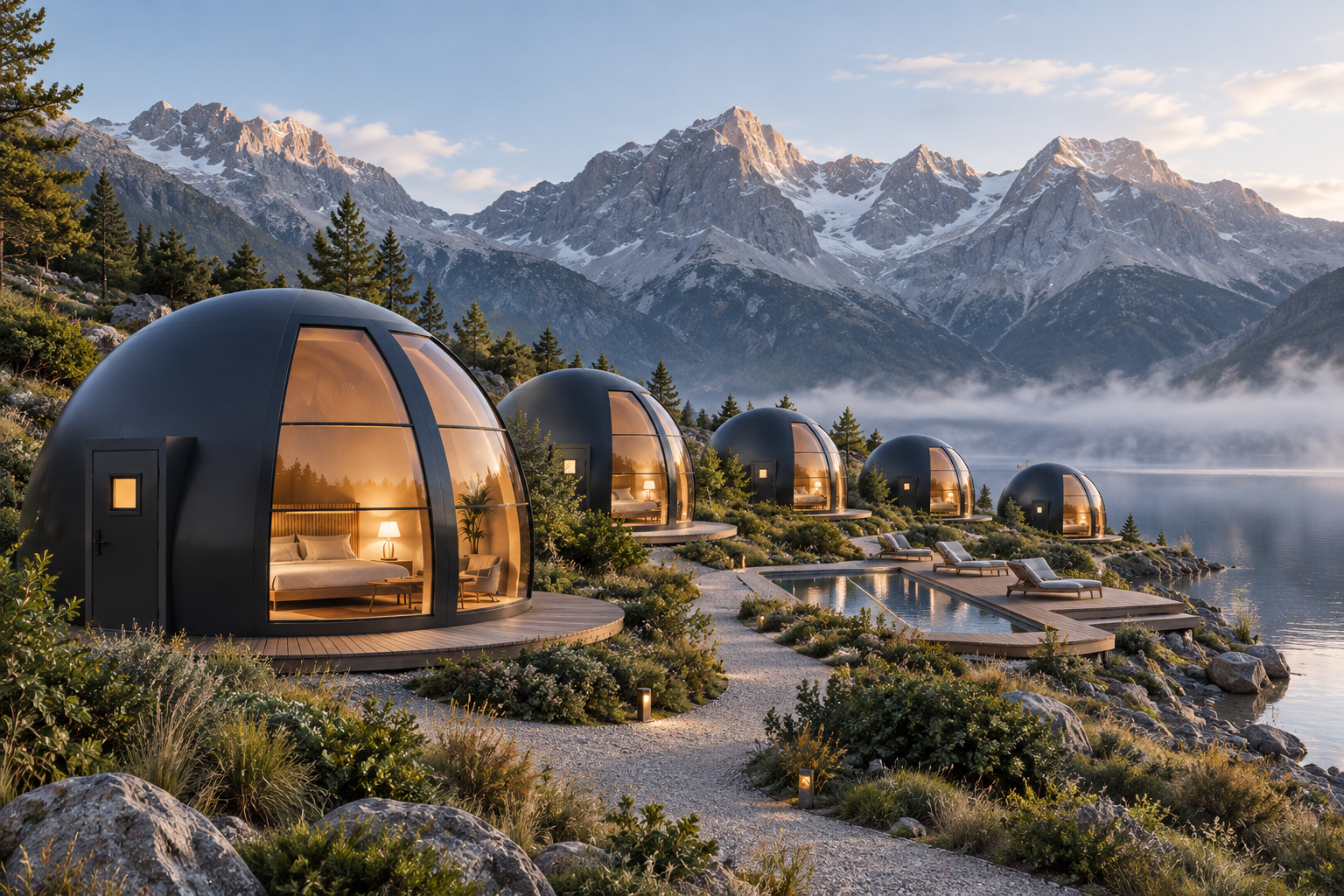
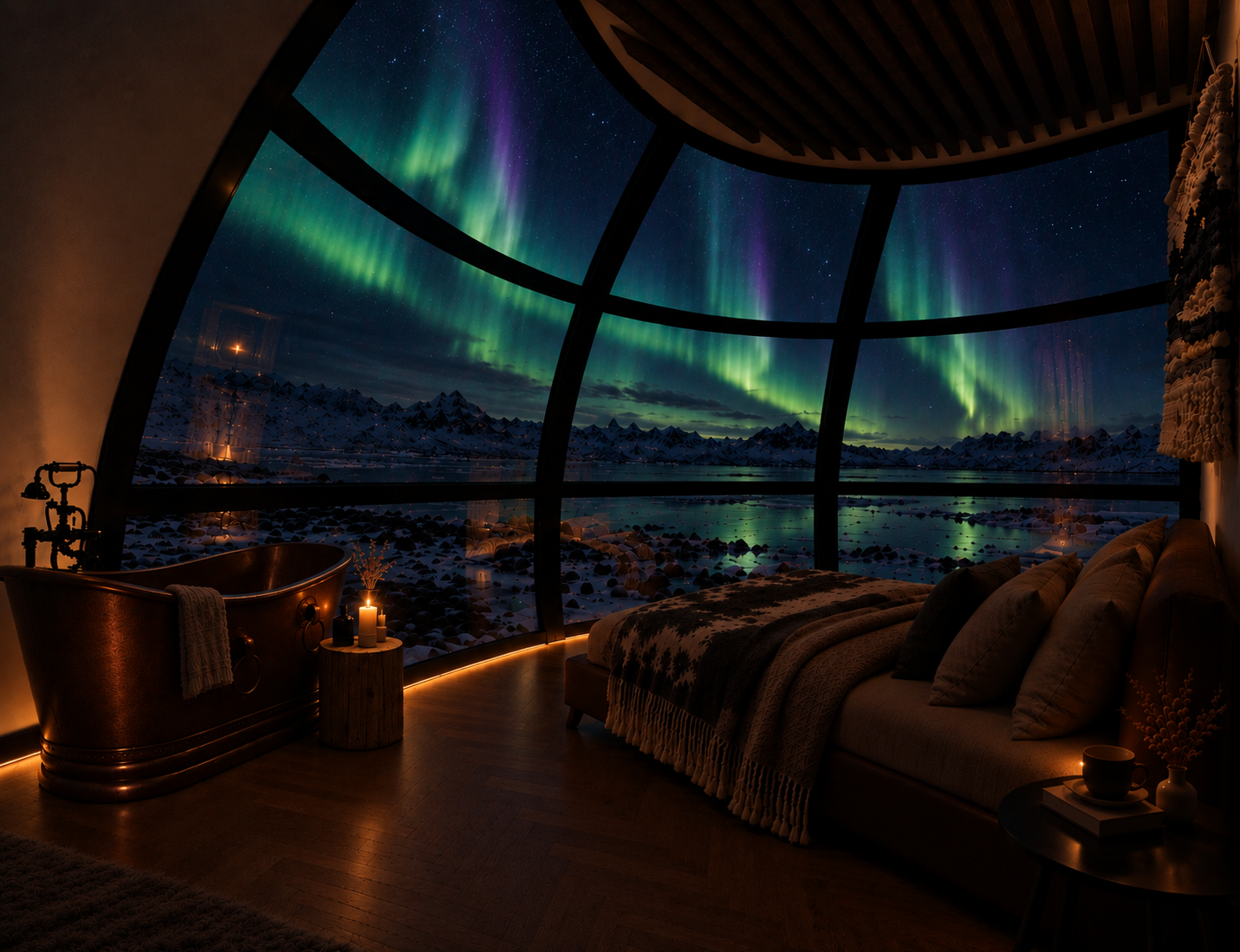
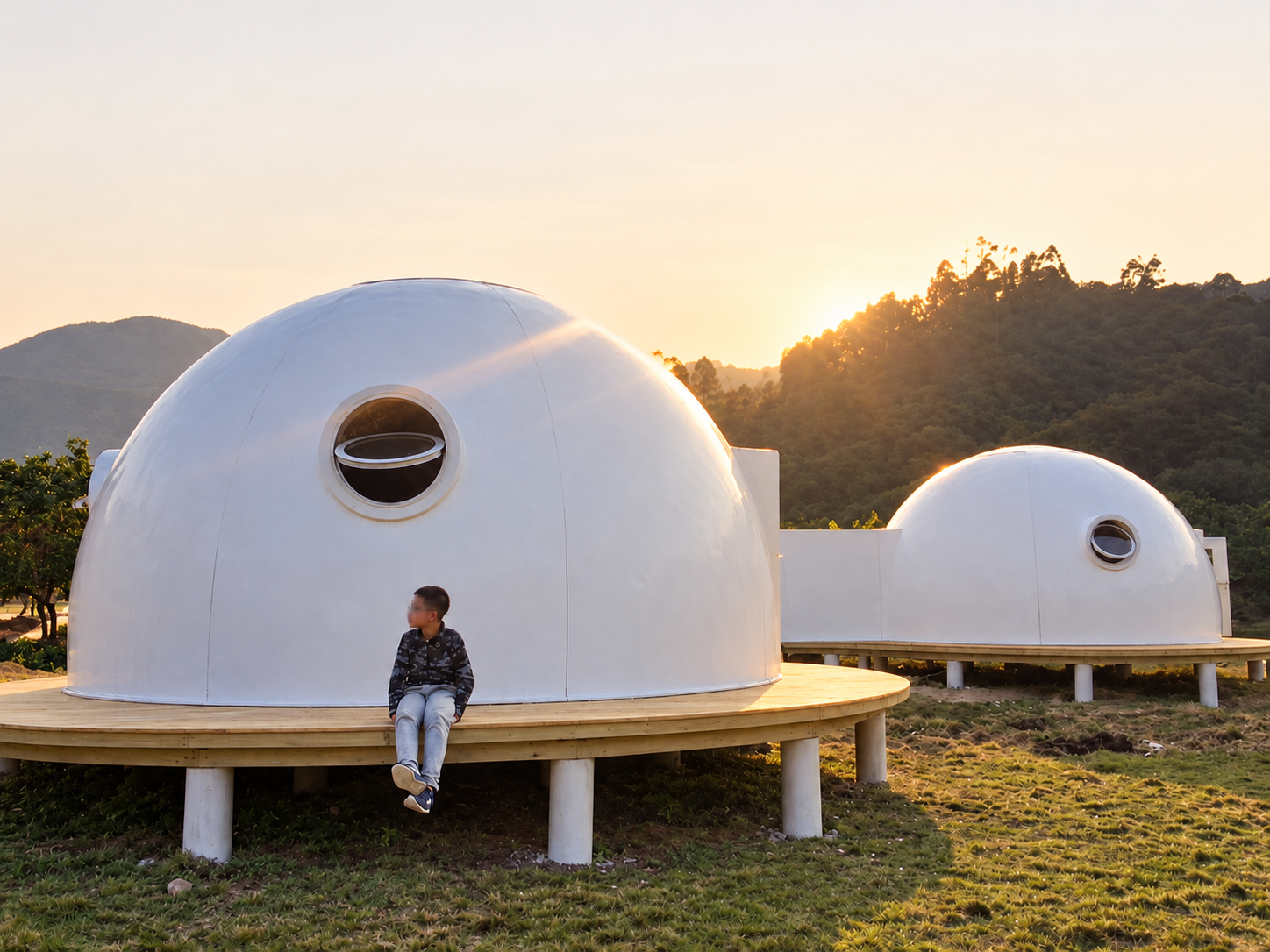
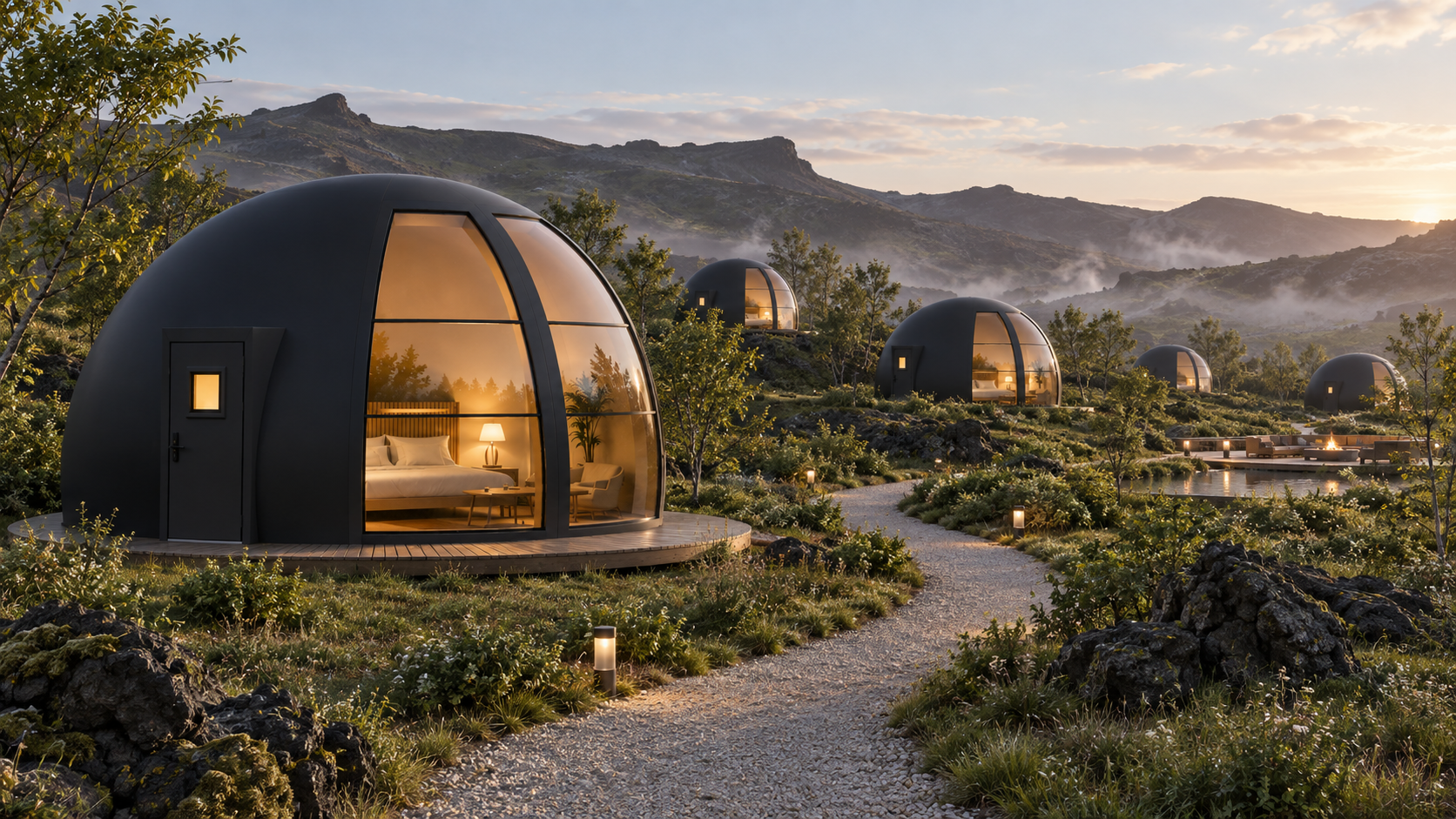
MarsDome makes the original nine-panel composite insulated dome. The shell is built from nine 4-inch (106 mm) composite sandwich wall panels, R-28, designed to slow heat loss in cold weather and heat gain in hot weather, with no fabric weather cover to tension or replace. The panels ship flat and assemble on site, which changes what a dome can be and where it can go. And instead of choosing between a flat window, a skylight or clear plastic, operators can add the Horizon window — a curved double-glazed window that follows the dome's own form and can be placed to face the view, up to a full 360 degrees — so a panoramic view doesn't have to mean plastic.
What’s the most innovative thing your company has done in the last year? Share a project, product, or initiative that your company has launched recently that you believe is pushing the boundaries of the glamping industry.
The biggest change we've made over the past year is the wall itself. It started with a question from an operator in Yellowknife, Canada (62 degrees north), who asked whether we could build the dome with a 4-inch (106 mm) wall. That question became our current panel: the domes we ship now are built from nine 4-inch (106 mm) composite sandwich wall panels, R-28, replacing the earlier 2.4-inch (60 mm) wall, for better insulation and a more solid structure in the same nine-panel build. We also rebuilt the mold around what we learned in the field, so installation is simpler and more predictable for the crew on site. The curved glass Horizon window is the part guests notice; the 4-inch wall is the part that makes a cold-weather stay work.
How do you incorporate sustainability into your business practices? In what ways are you making your business more sustainable? What are the challenges and benefits of these efforts?
For us, sustainability comes down to one decision: build the shell to last. The dome is designed for a 50-year life with no membrane to replace. The contrast with the rest of the category is concrete: a PVC cover runs R-1 to R-2, and in high-UV climates it carries a replacement cycle every three to five years. The 4-inch (106 mm) composite wall is R-28, so a room holds its temperature with less heating and less cooling — which matters most off the grid, where every degree comes from fuel or battery power brought in. The shell also ships compact, three domes to a container, so a container carries more shelter and less air. The honest challenge: composite panels are not easy to recycle at end of life, so our environmental case rests on lifetime and repairability rather than recyclability. We will not dress that trade-off up.
What’s one product, service, or idea you wish existed in the glamping industry? If you could introduce something new to the industry, what would it be and why? How do you think it would change the landscape of glamping?
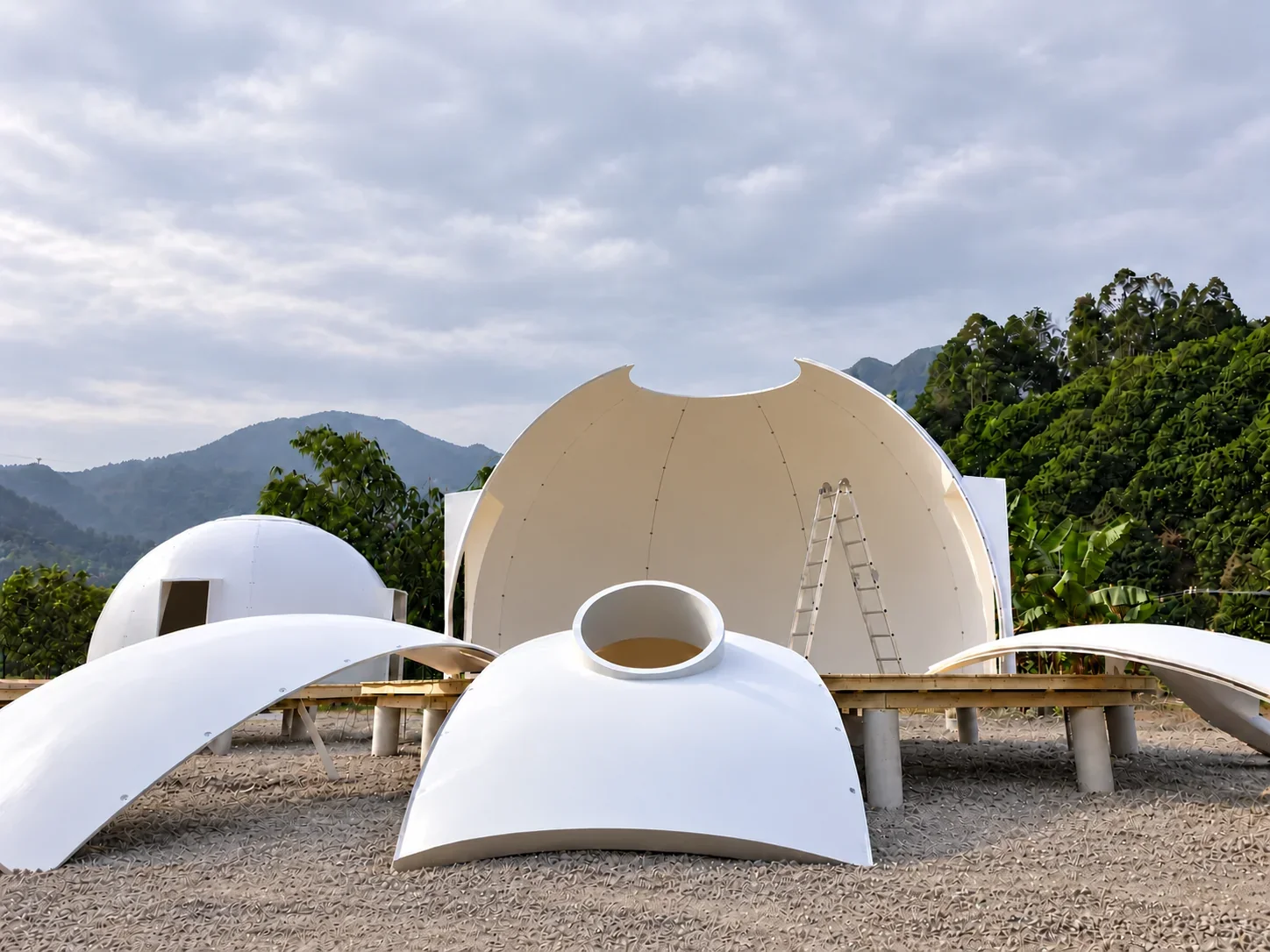
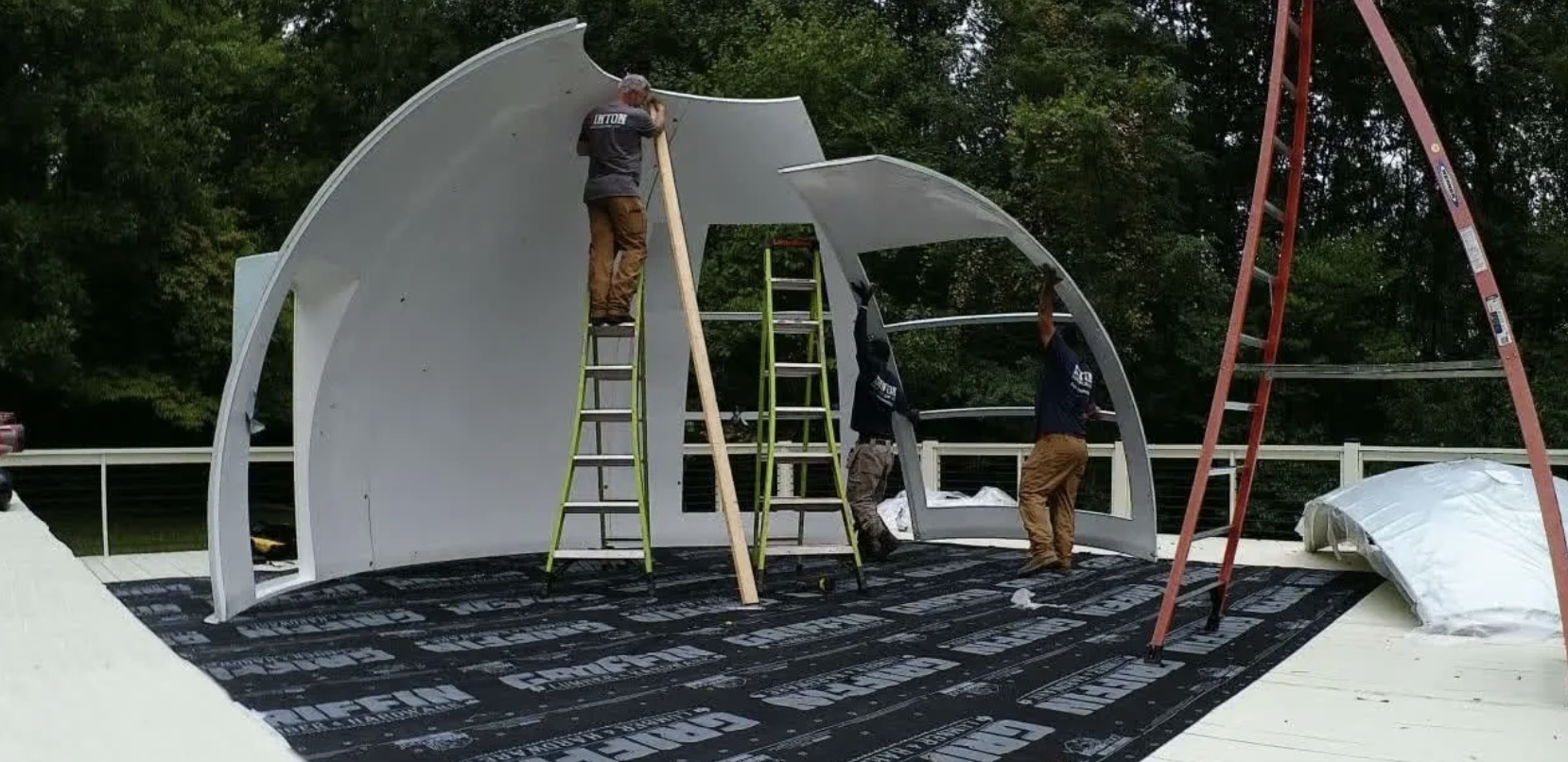
The thing I wish the industry would stop settling for is either/or. Guests get offered the view or the warmth: clear plastic that passes heat, or a solid wall that shuts the landscape out. Operators get offered a shell that needs renewing every few years, or one that needs cranes and heavy transport to get anywhere. The idea I wish existed, and the one we build, is a dome that refuses the trade: a composite shell with R-28 insulation that still ships in standard containers; nine panels that three or four people stand up in about three hours, with no fabric cover to renew; curved double-glazed windows placed to face the view, up to a full 360 degrees, so the panorama comes without the plastic. If that became the default, things change quietly and everywhere: stays stop being seasonal, remote sites become viable without oversized heating and power systems, and operators stop budgeting for replacement cycles every few years. That is the wish we organized our factory around, so we are not waiting for it.
What role do community and collaboration play in your business? How do you engage with your local community, other industry professionals, or your customer base? Why is this important to your business?
Most of our product changes don't start in a lab — they start as messages from operators. The 4-inch (106 mm) panel we build today came from an operator's request; our biggest tooling lesson came from listening to install crews. If a mold is precise, a dome goes up simply. If a mold is off, the bolt holes drift — and in a harsh environment, that is not an inconvenience, it is a disaster. So we scrapped the old mold and invested heavily in a brand-new high-precision mold, developed over the past year. That is the method now: the crews who assemble our domes in the hardest conditions are the ones who define what changes next. The same instinct runs outward: we stay active in the industry's association community and compare notes with peers across the sector, because a category this young only gets better when the people in it talk to each other. Closer to home, most of our suppliers sit within a day's drive of the factory, and the workshop that turns all of this feedback into panels is the same one the business started in. Twelve years in one place.
Can you share a story of how your work has positively impacted a customer or community? Describe an instance where your business made a significant difference in someone’s life or in the local community.
The project I keep coming back to is in the Yukon. An operator there has spent four years building toward eighteen remote camps, and he bought his first five domes from us in 2024: paid in full, delivered to the far north. Two wildfire seasons have since wiped out the seasons he had planned to build in, and the units already standing came through untouched. He has kept going anyway, and the plan for the remaining sites is still moving. None of that credit is ours — that is his persistence — but it is exactly what the product is for: a project like his can take two lost seasons and still be worth finishing, because what is on site does not rot, does not need a cover replaced, and does not need a maintenance trip flown in. That is the difference we want to make: not just a sale, but a project that survives the north.
What do you see as the next big shift in consumer expectations in the glamping industry? How are you preparing to meet or exceed these evolving expectations?
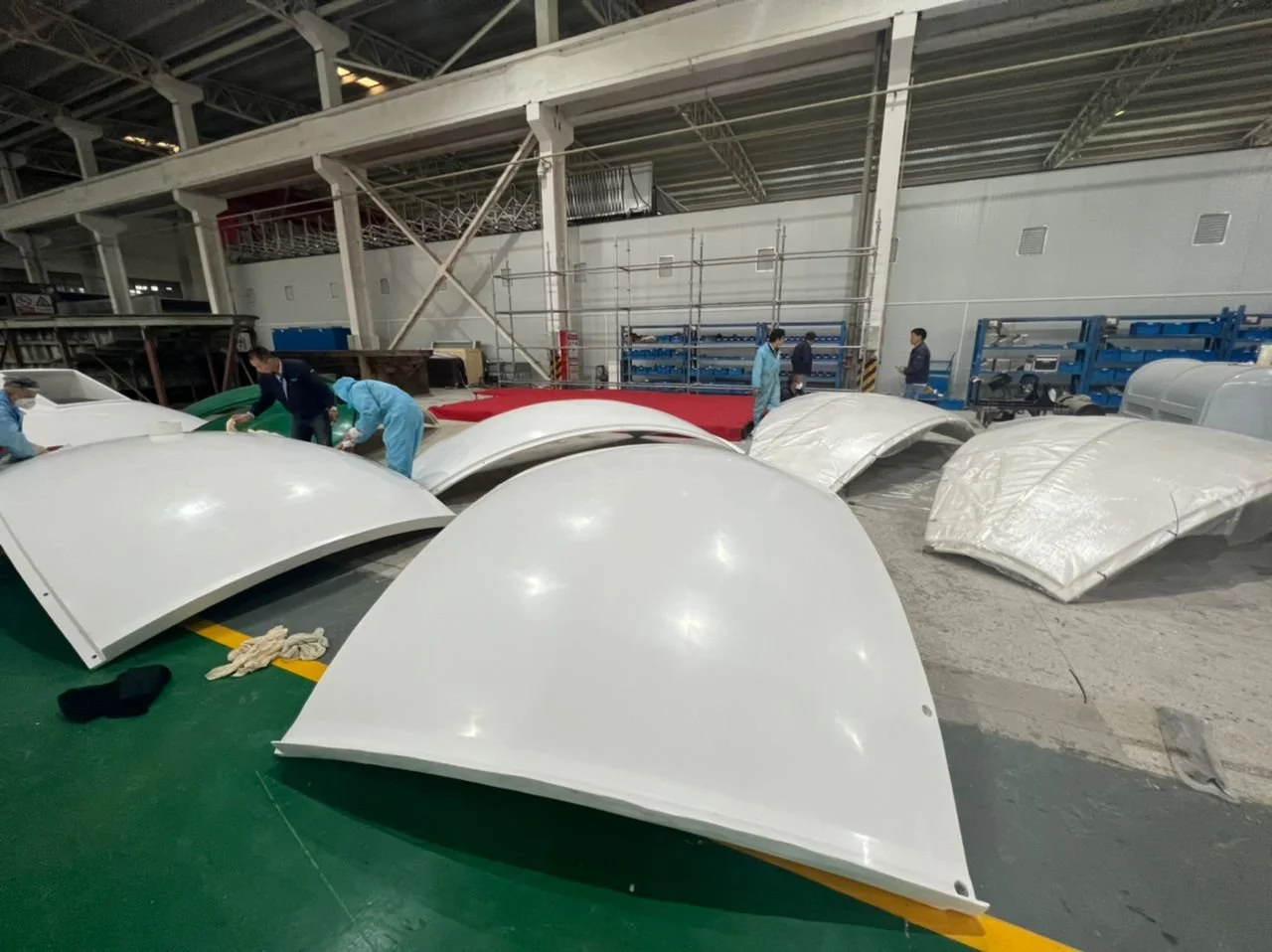
The next shift we see is how guests judge a stay. For years a dome could be charming and a little cold. The novelty carried it. That is ending: guests are booking with hotel expectations, and warm, quiet, dry and private are now the floor rather than the upgrade. We also see the season stretching into winter, with northern stays and aurora trips among them, which puts the product under a test summer never ran. Our preparation has been product-side and deliberate: the 4-inch (106 mm) wall and R-28 insulation, real glass instead of plastic windows, a rebuilt high-precision mold, and an install that three or four people finish in about three hours. Every change of the last years points the same way. We prepare by making the shell the least risky part of an operator's plan, because when guest expectations rise, the shelter behind the experience has to rise first.
What challenges do you see the industry facing, and how are you addressing them? Discuss any significant challenges within the industry and how your company is working to overcome them.
Two challenges stand out to us, and they feed each other. The first is classification. In the rulebooks, a dome is not one fixed thing: some places treat it as a tent, some as a temporary structure, some send it into full planning — and that answer decides what a project has to prove and how long it takes. Category first, purchase second; getting that order backwards is the expensive way around. The second challenge is the culture of over-promising, which makes the first one worse: "permits are easy", performance numbers with no source, certainty that falls apart the moment a real project starts. Our answer to both is the same: we bring the evidence a project needs to be classified and approved — the full technical parameters — and we support the licensed engineer the operator hires locally. We do not replace that engineer, and we do not promise an approval we cannot issue.
Can you share a recent success story or milestone your company has achieved? Describe a recent achievement or success your company has experienced. What was the impact on your business or the industry?
For twelve years, most of our inquiries came the old way: we were listed on B2B platforms, waiting for a buyer to find us. The past year changed that — we rebuilt our website, became an AGA Preferred Partner, and put MarsDome in front of US operators around the Glamping Show. Now customers can discover the category itself, not just a listing, and the first inbound inquiries arrived from Alaska and the US Virgin Islands — conversations that started with them instead of with us. For a factory like ours, that is the milestone: the composite insulated dome is finally getting introduced to people who did not know the category existed. Until now, fabric tents and thin-shell domes were all they had seen.
What’s the most unexpected lesson you’ve learned in the glamping industry? Share a surprising insight or lesson that you’ve gained from your time in the industry. How has it shaped your approach to your work?
We came into this industry expecting the hardest problem to be cold. The field taught us something different: the two complaints that actually reach operators are noise and damp. A thin shell drums in the wind, and in winter moisture gathers on the inside of it. You cannot imagine how infuriating it is to have water drip onto your face at night. Details like that decide the review long before anyone checks a spec sheet. That insight changed how we treat the wall. Its job is the line between the room and the weather; the thermal numbers follow from that. Better insulation keeps the inside surface closer to room temperature, so moisture is far less likely to condense there; the dense composite shell cuts storm noise by roughly 35 dB. We stopped designing for temperature alone, and started designing for how the night actually feels.
If you could spend a week at any glamping site in the world, where would it be and why? Whether it’s a dream destination or a place that inspires you, where would you go to unwind or gather new ideas?
If I could take a week anywhere, I would take it in February, in the Northwest Territories, in one of our own domes, and I would go as a guest. I spend my life on the maker's side of the product: panels, tooling, tolerances. A week inside a finished one, in the deep cold of a northern winter, would let me live what a guest lives: what the mornings feel like, how the room performs when it is tested hardest, what I would complain about first. That is less a holiday than the most honest product review I could give myself, and it is where I would gather ideas.
How do you stay inspired and creative in your work? What practices, hobbies, or experiences help you maintain your creativity and passion for what you do?
My creativity doesn't come from a blank sheet. It comes from constraints. We design for sites with no roads, no power lines and no maintenance crew; that setting removes most of the easy answers before work even starts, and pressure like that forces better ideas. So our approach has always been subtraction: no frame, no fabric cover to replace, no consumables to ship in. Every part we can take out is a part that cannot fail and will never need someone flown in to fix it. What is left is the essence: nine panels, one container, and a room that works in every season.
What’s your vision for the future of your company within the glamping industry? Describe your long-term goals and ambitions. How do you see your business growing or evolving in the next few years?
MarsDome was never chasing the biggest numbers. What we want is not the biggest sales. It is a category people trust, and one product that works everywhere it goes. The long-term vision, unchanged since 2014, is stable places to live that keep working for decades in remote and extreme environments — structures an operator can plan around instead of worry about. Over the next few years that means the same work as always: fewer parts, better precision, longer life. It also means growing through partners who know their own market rather than building our own network around the world — and we welcome more of them. If you operate glamping sites, advise projects, or want to build the composite insulated dome market in your region, we would like to hear from you. We would rather introduce this category together with partners than sell it alone.
What’s the most memorable experience you’ve had with a client or partner? Share a story that stands out in your career, whether it’s funny, touching, or particularly impactful.
One customer in a remote mountain region waited two years for his domes. The shipment was stranded in the pandemic years, and the units sat in storage far longer than anyone had planned; by the time they reached him, the finish had taken marks. He never asked us to send anyone. His own crew assembled and raised every dome, with no calls for help and no complaints at all. What stays with us is the trust: a customer who waited two years, then needed nothing from us but the product. When his next unit came due, he stayed with us, and this time it ships upgraded — the 106 mm line. It also changed how we pack: our panels now ship wrapped the way luxury cars are shipped, so no matter how long the wait, time and storage should not leave a mark on the product.
If you could write a book about your journey in the glamping industry, what would the title be and why? What title would capture your story or philosophy in the industry? Give a brief description of what the book might include.
The title would be Nine Panels. The number is not a style choice: for a standard 20-foot (6 m) dome, nine is what falls out when you optimize for the least assembly work and the most efficient shipping. One dome fits in a 20-foot container; three fit in a 40-foot high-cube; that packability is the core of the product, not a footnote. We solved it first: MarsDome is the original nine-panel composite insulated dome, and everything we believe lives in that math — fewer parts, fewer failure points, nothing that needs replacing. The book would open with the story behind the name, then follow the years of learning from operators in the coldest places anyone builds. Much of it would make the case for subtraction: better precision, longer life, less to go wrong. It would also include the times the field told us we were wrong, because those corrected the product more than any plan did. And it would be honest about the parts that are still unfinished: a young category, still earning trust one project at a time.
How is your company innovating within the glamping space? Describe any new technologies, products, or services you are developing or implementing to push the boundaries of glamping.
Two things drive how we work on this. The first is subtraction: we improve the dome by removing, not adding. The second is newer: we have folded AI into the way we prepare projects. For a small factory, that changes what is possible. We can understand a site's climate and conditions far faster, run first-pass parameter checks on how a wall, a window or a layout will behave there, and show a client a visualization of their project before anything is ordered, so the conversation starts from a picture and not a spec sheet. The boundary matters as much as the tool: AI speeds up the preparation, but the engineering judgment stays with people — ours, and the licensed engineers each project hires locally. And we still believe the best announcement is a finished panel, not a roadmap.
What do you think the future of glamping looks like? Share your vision for the future of the glamping industry. Where do you see the industry headed in the next 5-10 years?
The novelty phase of this industry is ending, and that is healthy. The first wave came on photographs; the next decade will be judged on the boring questions: repeat guests, winter operation, whether the asset is still earning in year five. That will split the market between stays built as hospitality businesses and stays built as one-season backdrops. The other shift we watch for is climate. The real effect in most regions is not that weather gets more extreme everywhere — it is that places which never planned for wind, fire seasons, or long heat can no longer rely on the assumptions their sites were chosen on. So resilience stops being a feature some operators pay for and becomes part of how a site is judged from the start. We build for that future on purpose: it is cheaper to be ready than to be surprised.
Can you share a memorable story or experience you've had in the glamping industry? Describe a particular event or experience that stands out during your time in the glamping industry.
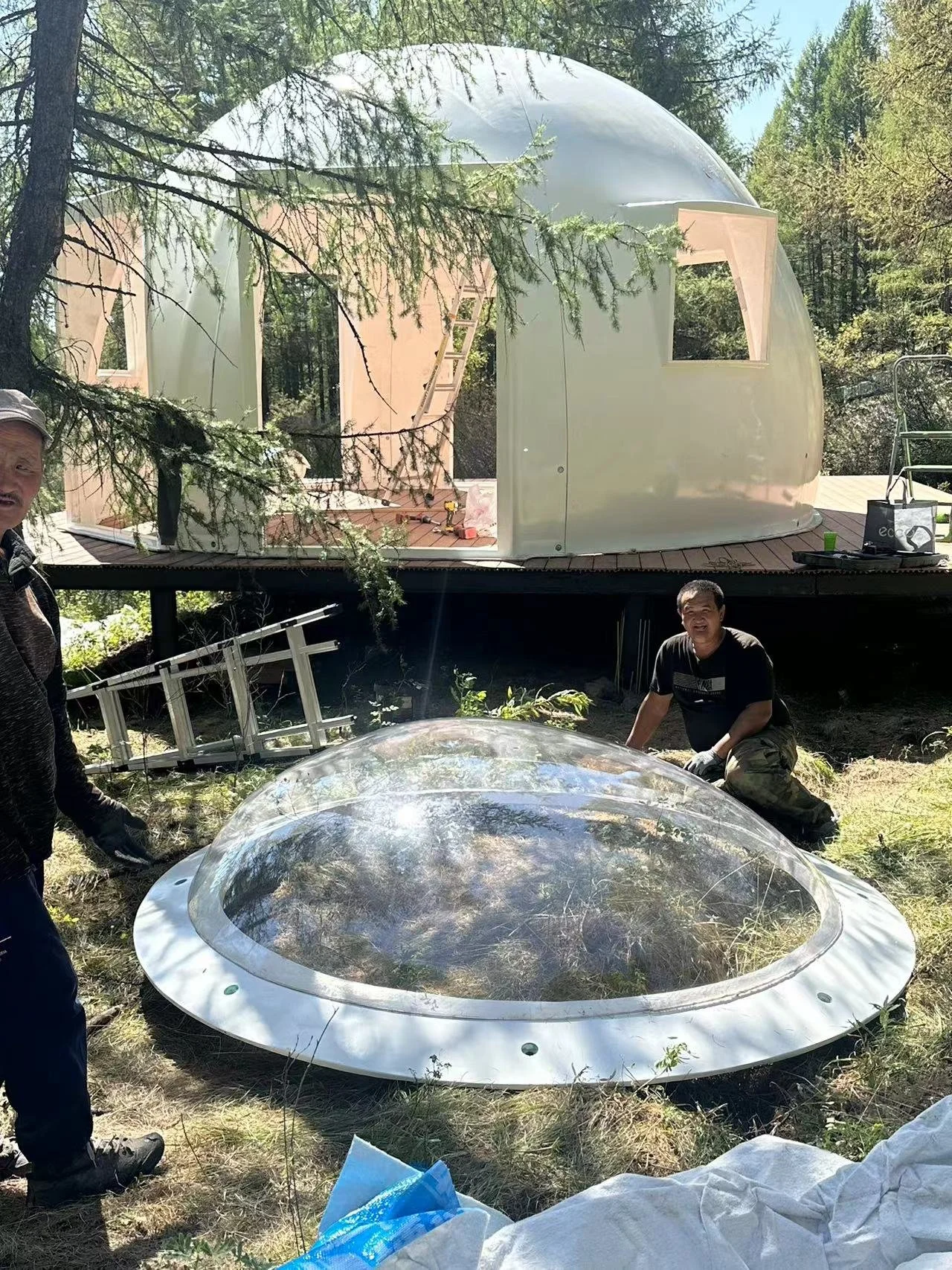
One of the most memorable messages I have received in this business came from a customer in Mongolia in 2018: photos of a dome that had just gone up in a forest, sent with real delight. The pictures show two workers in everyday clothes fitting the transparent skylight cap into the top panel: the dome already up, sitting on a raised deck, with ladders as the heaviest equipment on site. No crane, no heavy machinery, no specialist crew — for a remote site, the structure should be the easy part. Then came his verdict, half disbelieving: it had gone up more easily than a traditional ger. In Mongolia, the ger is the benchmark everyone knows how to raise. That is the review I still remember. And it previewed where the business would go: projects in the places that are hardest to reach, where everything else is complicated, so the build cannot be.
How has being a part of the glamping industry impacted you personally? Reflect on how your involvement in glamping has influenced your life, whether personally or professionally.
Two changes stand out. The first is the map in my head. Most of the places that define my work now are places I have never stood in — a forest in Mongolia, the Yukon, Alaska, the US Virgin Islands. The decisions I make in a workshop come from those places: their winters, their access roads, one line from a customer. A small factory's whole day gets organized by geography it cannot see. The second change is smaller and harder to explain: I am interested in every dome now — any kind, anywhere. Fabric ones, plastic ones, whatever someone has put up in a field. I stop and look, because there is always something to learn about how a shape meets weather. The industry did not just give me a business; it gave me something to keep studying.
Is there anything else you would like to share about your experience in the glamping industry? Use this space to add any additional thoughts, stories, or insights that you believe are important.
If there is one thought we want to leave here, it is this: in a stay, almost anything can be fixed with service — except the shelter. A cold wall, a leak, a room that will not stay quiet: those are not service problems, and a good breakfast does not recover them. So we build as if the structure has the first and final word, because in a guest's memory it usually does. The other thing worth saying is that we did not plan our way into this industry. It pulled us in, and then it taught us: operators explaining what their winters demand, crews showing us where the product was wrong. This industry is generous with what it knows. We try to answer in the same spirit.
Share a quote that inspires you in your work, and explain why it resonates with you.
The line I keep coming back to is from Antoine de Saint-Exupéry: "Perfection is achieved, not when there is nothing more to add, but when there is nothing left to take away." It resonates because it runs against the reflex most manufacturers have, ours included: when something goes wrong, add — another layer, another part, another treatment. The field taught us to go the other way: the frame that is not there cannot rust; the cover that does not exist cannot tear; the part we never built cannot fail in a Yukon winter. So when people ask why the dome has only nine panels, the honest answer is that it started with more, and we kept removing. The quote sits in my head as a direction, not a slogan — the work is to keep subtracting even when adding something would be easier to explain.
MarsDome's story is a reminder that innovation doesn't always mean adding more. Sometimes, it means finding ways to simplify, strengthen, and improve what already exists. By listening to operators, learning from installation crews, and continually refining its engineering, MarsDome has built its business around solving real challenges faced by outdoor hospitality developers and operators.
As guest expectations continue to evolve and more properties look toward year-round operations and remote destinations, reliable, well-designed accommodations will play an increasingly important role in the industry's future.
With 12 years of experience behind them and a continued focus on durability, precision, and long-term performance, MarsDome is looking ahead to new opportunities and partnerships across the industry.
Thank you to MarsDome for being a valued AGA Preferred Partner and for sharing your story with our community!