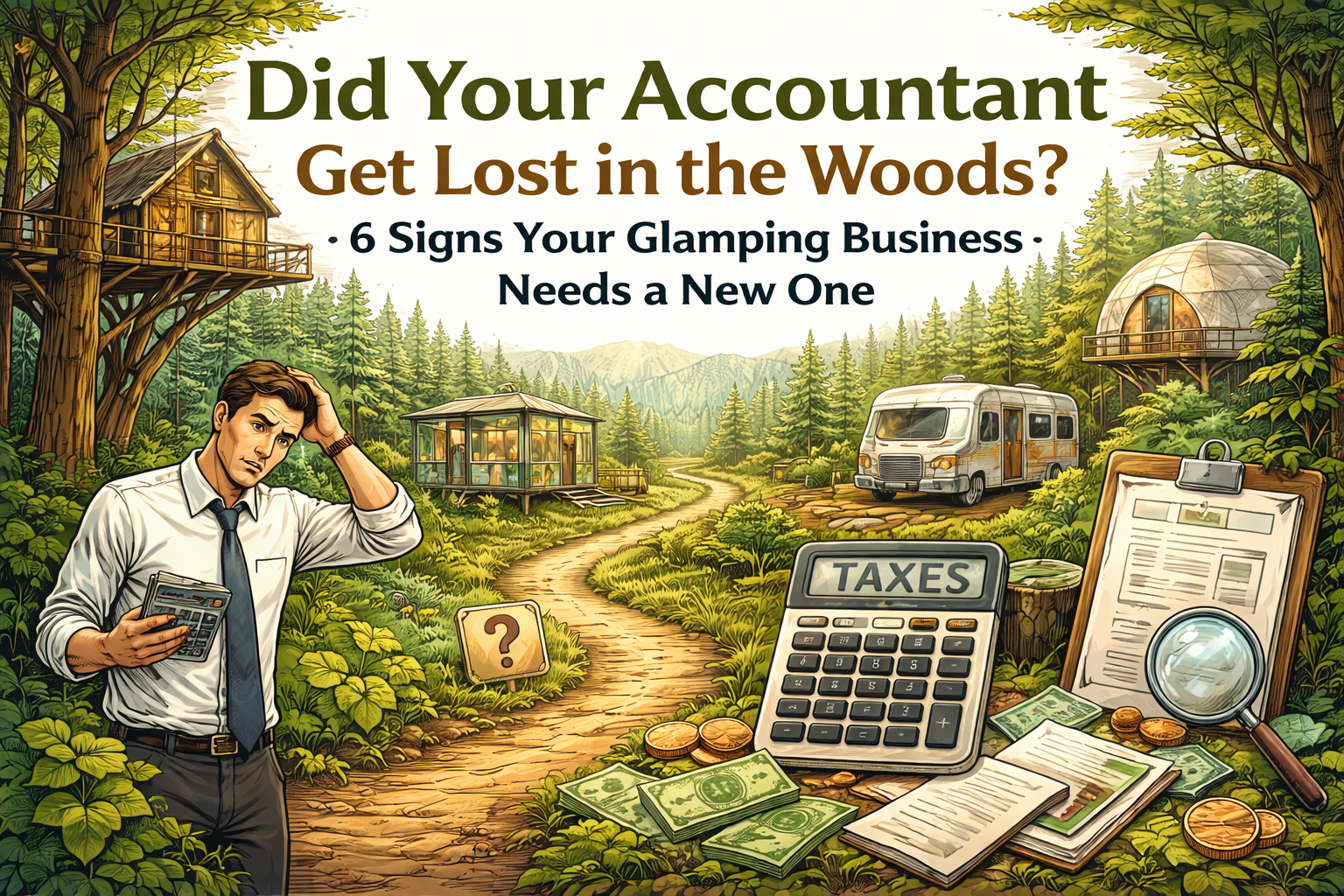
Did Your Accountant Get Lost in the Woods? 6 Signs Your Glamping Business Needs a New One
Guest blog contributed by Specialized Accounting

Tyler Otto is the Owner and President of Specialized Accounting.
He has an extensive background in the hotel and finance industry and specializes in optimizing processes and creating efficiencies, while building highly effective and engaging teams.
Running a glamping business is equal parts magic and mess. You’ve got cozy cabins, Instagram-worthy views, and guests who book months in advance, but behind the scenes there’s bookings, deposits, seasonality, staffing, lodging taxes, and a lot of spreadsheets. That’s where your accountant should come in: as your financial guide, not a ghost who only appears at tax time.
If your accountant feels more like a lost hiker than a trailblazer, it might be time to reconsider the relationship. A healthy accountant-glamping owner partnership should feel like a teamwork hike, not a solo trek through the dark. You should be walking side by side, with someone who actually knows the terrain of hospitality and glamping.
In this post, we’ll walk through six signs your glamping business may have outgrown its current accountant, and why it pays to find a financial partner who knows which path to take.
1. You only hear from them at tax time
If the first time you see your accountant each year is when they send you a panic inducing email about tax deadlines, you’re not partners. You’re strangers who meet once a year for a high stress reunion.
For a glamping business, that’s a big problem. You have major revenue swings, busy seasons, and months where cash flow goes from “glamping gold” to “campfire embers.” A good accountant should help you prepare for those swings, not just file a return after the fact.
If you’re constantly surprised by what’s happening in your business, your accountant might be wandering somewhere off the trail.
2. You don’t understand your financial reports
If your profit and loss statement looks more like a treasure map with no legend, it’s not you. It’s the way it’s being presented.
Your financials should tell a clear story: what’s working, what’s costing you, and where your glamping business is headed. You should be able to look at a report and say, “Oh, that’s why we’re busy;” or “Wow, those cleaning costs are climbing.” If you always need a decoder ring, your accountant isn’t doing their job.
A good accountant doesn’t just hand you numbers. They help you read the map.
3. They don’t understand hospitality
Glamping is not retail. It’s not consulting. It’s not a generic small business template filled out by someone who’s never dealt with lodging taxes or nightly guest stays.
If your accountant doesn’t get that glamping comes with deposits, cancellations, variable nightly rates, and all the quirks that come with running a hospitality business, they may miss opportunities to save you money or catch problems early.
For example, how bookings are recorded, how occupancy taxes are calculated, and how expenses like linens or maintenance are tracked can look very different in a lodging business than in a podcaster’s or plumber’s books.
When your accountant doesn’t know the landscape, you’re more likely to get lost in the fine print
4. They’re reactive instead of proactive
Accounting should not be a game of “wait and see.” A good accountant should be ahead of the curve, not behind it.
If you’re always the one asking about tax strategy, cash flow, or whether you can afford that new tent or hot tub, your accountant may be operating in survival mode. A proactive relationship means checking in before the peak season, planning for year end, and flagging issues before they turn into full blown campfires.
For a glamping business, that foresight can mean the difference between steady growth and getting scorched by surprise expenses.
5. Your bookkeeping is still a mess
If your books are always “kind of okay,” you’re constantly digging for information, or your accountant keeps asking for the same missing documents, it’s a sign the system isn’t working. Bookkeeping should make your life easier, not feel like a never-ending scavenger hunt.
Glamping businesses generate a lot of transactions: bookings, payment platforms, deposits, cleaning fees, vendor invoices, payroll, and more. When those are organized well, your accountant can focus on strategy instead of cleanup duty.
Clean books are like a good trail map: they show you where you’ve been, where you’re going, and where you might want to turn off the main path.
6. Your business has grown, but your accountant hasn’t
Sometimes the issue isn’t that your accountant is bad. It’s that your glamping business has outgrown their skill set or their mindset.
Maybe you started with one glamorous tent and now you’re managing multiple sites, staff, vendors, and more complex reporting needs. Maybe your revenue has grown, but your tax strategy still looks like it belongs in year one. If your accountant hasn’t adapted with you, they may no longer be the right fit.
Growth changes the kind of financial support you need. What worked when you were just getting started may not be enough once your business is scaling or diversifying.
What a healthy accounting relationship looks like:
A healthy accounting relationship should feel like a two-way partnership, not a one-way paperwork exchange. You should be able to pick up the phone, send a quick message, and get a timely, clear answer that keeps you moving forward.
For glamping owners, that often means:
Regular check-ins, not just an annual tax time flurry.
Financial reports that are easy to understand and actually useful.
Knowledge of hospitality and lodging, including how glamping businesses typically operate.
Tax planning that happens long before April.
A bookkeeping system that can scale with your business.
In short, your accountant should help you run a better glamping business, not just file a better return.
Time to change?
If any of these signs sound familiar, it may be time to look for a new financial guide. Changing accountants can feel like a hassle, but staying with the wrong one can cost you more in missed savings, cloudy visibility, and needless stress long-term.
The right accountant should feel like someone who knows how to navigate the woods with you, not someone who left you holding the compass and wondering which path to take.
If your glamping business is ready to level up, it may be time to partner with an accountant who understands the campground, the bookings, and the balance sheet. The team at Specialized Accounting helps outdoor hospitality businesses find their financial footing and plan the trail ahead, so you can focus on giving your guests an unforgettable stay!