The Glamping Industry Is Evolving Faster Than Ever
Glamping is no longer a niche corner of the travel industry—it’s one of the fastest-growing segments in outdoor hospitality. With rising traveler expectations and increasing investment across the sector, operators who understand where the industry is headed will have a major advantage.
As we move through 2026, a few key trends are clearly shaping how glamping properties are designed, marketed, and experienced. Whether you’re launching a new site or refining an existing one, these trends offer a roadmap for staying competitive.
1. Experience-Driven Travel Is Leading Demand
Today’s travelers are prioritizing experiences over traditional accommodations—and glamping sits perfectly at the intersection of nature and curated hospitality.
Guests aren’t just booking a place to sleep. They’re looking for:
Guided nature experiences
Wellness retreats and yoga programming
Culinary and farm-to-table offerings
Stargazing and astronomy experiences
Adventure partnerships and excursions
This shift reflects a broader travel trend: people want meaningful, memorable stays that feel immersive and personal. Properties that design experiences around their natural surroundings tend to see stronger guest satisfaction and repeat bookings.
2. Sustainability Is Now a Baseline Expectation
Sustainability is no longer a differentiator—it’s an expectation.
Modern travelers are actively choosing accommodations that align with their environmental values, and glamping is uniquely positioned to meet that demand.
In 2026, the conversation is evolving beyond “eco-friendly” into:
Low-impact infrastructure and materials
Renewable energy integration
Water conservation and waste systems
Regenerative and conservation-focused experiences
Some properties are even moving toward “net-positive” models, where the guest experience actively contributes to the surrounding ecosystem.
3. Wellness and Nature Are Becoming Deeply Connected
Wellness is no longer confined to spas—it’s moving outdoors.
Travelers are increasingly seeking experiences that combine physical, mental, and emotional well-being with natural environments. This includes:
Forest bathing and nature immersion
Outdoor yoga and meditation
Cold plunges and natural water features
Digital detox experiences
At the same time, guests still expect comfort. The modern glamper wants the feeling of being immersed in nature without sacrificing amenities like private bathrooms, climate control, and Wi-Fi.
4. Unique Accommodations Drive Discovery and Bookings
The structure itself has become part of the experience.
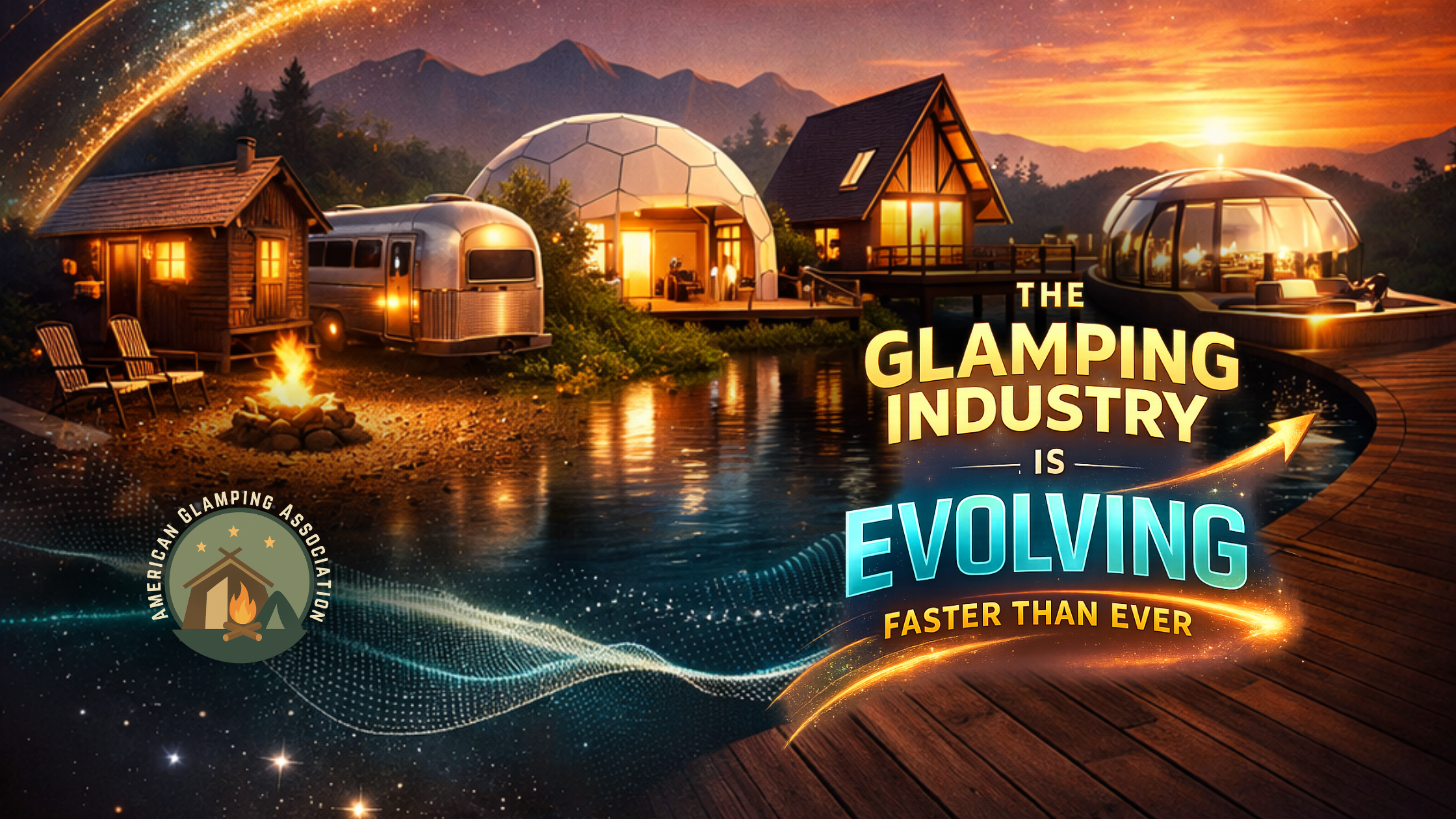
From safari tents and domes to treehouses and cabins, travelers are drawn to accommodations that feel distinctive and “share-worthy.” Social media plays a major role in this—unique, visually striking stays often drive organic discovery and bookings.
At the same time, diversification is key. Offering a mix of unit types can help operators:
Attract a wider audience
Increase occupancy across different price points
Encourage repeat visits
5. Year-Round Revenue Is a Major Focus
Seasonality has always been a challenge in outdoor hospitality—but glamping is helping change that.
With the right infrastructure and amenities, many properties are now able to operate year-round. This includes:
Weather-resistant accommodations
Heating, insulation, and climate control
Seasonal programming and experiences
Cabins and similar structures are especially valuable here, as they allow for consistent occupancy regardless of weather conditions.
For operators, extending the season—or eliminating the off-season entirely—can dramatically improve long-term profitability.
6. Digital Discovery and AI Visibility Are Reshaping Marketing
How guests find glamping properties is changing just as quickly as the experiences themselves.
Travelers are increasingly discovering destinations through:
Social media
Search engines
AI-generated recommendations
This means operators need to think beyond traditional SEO and focus on:
Clear, structured website content
Experience-focused storytelling
Strong visual assets
Consistent online presence
Properties that invest in digital visibility are better positioned to capture demand at every stage of the booking journey.
Final Thoughts: The Future of Glamping Is Experience-Led
The biggest takeaway for 2026 is simple: glamping is no longer just about accommodation—it’s about experience design.
Operators who succeed will be the ones who:
Build immersive, nature-connected stays
Meet sustainability expectations
Offer distinctive accommodations
Extend their booking season
Show up where modern travelers are searching
As the industry continues to grow, staying aligned with these trends will be key to building a resilient, future-ready glamping business.
Want to Stay Ahead of Industry Trends?
The American Glamping Association provides operators with insights, resources, and connections to help you grow in a rapidly evolving market.
👉 Explore more industry resources or join the AGA community to stay ahead.