Glamping Business Resources for New Operators: What You Actually Need to Get Started
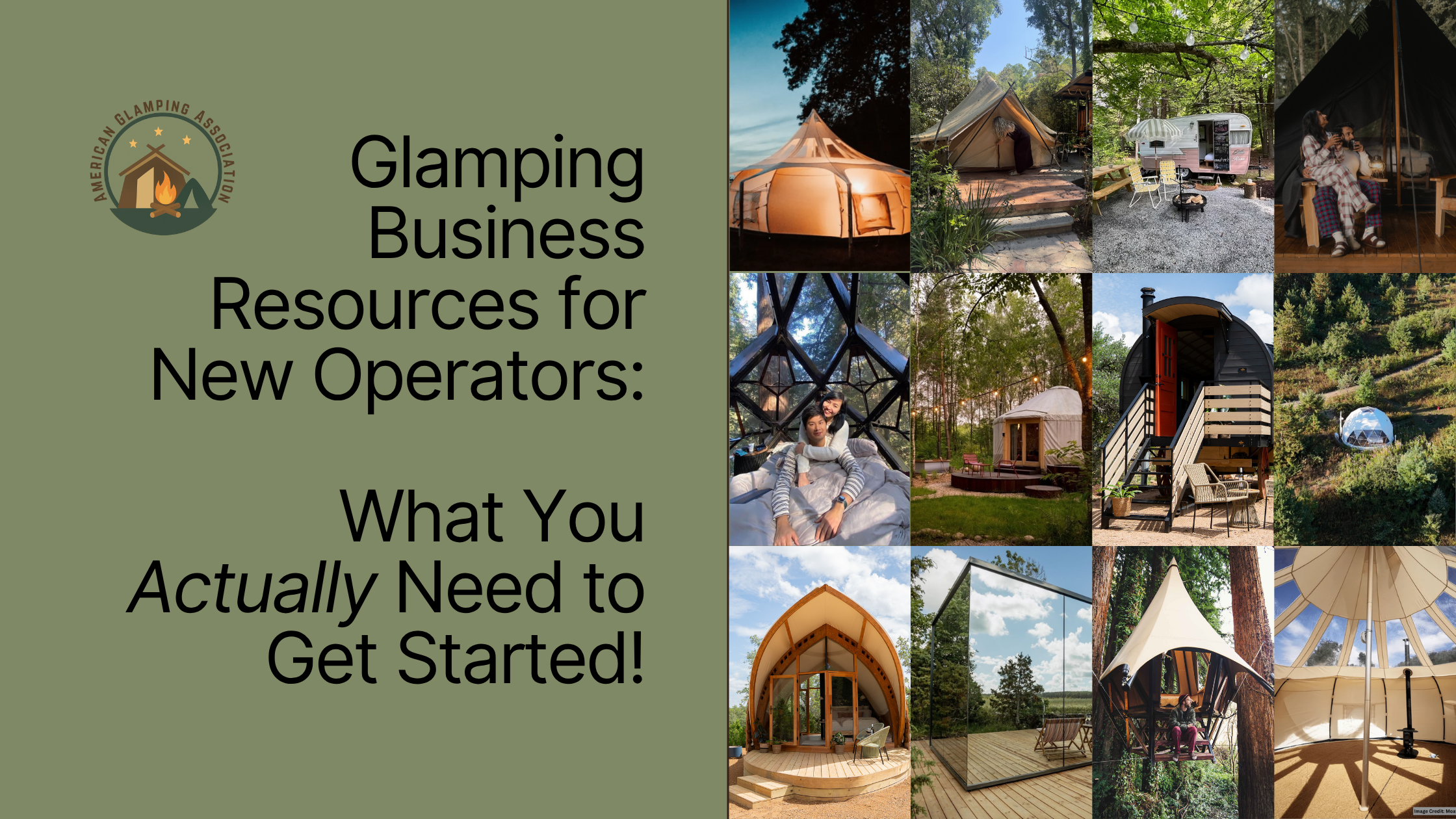
Starting a Glamping Business? Here’s Where to Focus First
Launching a glamping business is exciting—but it can also feel overwhelming.
From land selection and permitting to guest experience and marketing, there are a lot of moving parts. The good news? You don’t have to figure it all out alone.
With the right resources and guidance, building a successful glamping business becomes much more manageable—and far more strategic.
This guide breaks down the key resource categories every new operator should understand before getting started.
1. Business Planning and Feasibility
Before you invest in land, structures, or branding, you need a clear plan.
A strong foundation starts with:
Market research and demand analysis
A defined target audience
A clear business model and concept
Financial projections and startup costs
Creating a business plan isn’t just a formality—it helps you avoid costly mistakes and gives you a roadmap for growth.
Many successful operators also begin with a feasibility study, which helps estimate costs, pricing, and potential returns before committing to a project.
Looking for a reliable source? Check out AGA partners Walden Insights, and their Land Opportunity Test.
2. Land, Zoning, and Permitting
One of the most critical (and often underestimated) parts of starting a glamping business is understanding regulations.
Before moving forward, you’ll need to consider:
Zoning requirements
Planning permissions
Environmental regulations
Infrastructure access (water, power, waste)
Skipping this step can derail an entire project. Conducting research—or even a feasibility assessment—early on can save significant time and money.
3. Design, Structures, and Site Development
Glamping is not just about placing tents on land—it’s about creating an experience.
New operators need to decide:
What types of accommodations to offer (tents, domes, cabins, yurts)
How the site will be laid out
What amenities will be included
Structures vary widely in cost and complexity, from a few thousand dollars for basic tents to significantly more for cabins or custom builds.
The key is aligning your design with your target audience and overall concept.
4. Guest Experience and Positioning
What makes your glamping business different?
Today’s travelers are looking for more than a place to stay—they want a curated experience. This could include:
Nature-based activities
Wellness offerings
Unique design or aesthetic
Local partnerships
Defining your niche early helps guide every decision—from layout to marketing.
For leaders in curating the guest experience and extensive, worldwide insights to glampsites, and lifelong travelers check out Honeytrek and their Glamping Insight Services.
5. Marketing and Digital Presence
Even the most beautiful glamping site won’t succeed if people can’t find it.
Modern operators need to focus on:
A strong, SEO-optimized website
High-quality visuals and storytelling
Social media presence
Direct booking capabilities
Your website, in particular, plays a major role in converting interest into bookings and should clearly communicate your experience and value.
Interested in increasing your online impact? Check out this guest blog “The Importance of Migrating from SEO to GEO” written by Ann-Tyler Konradi (co-founder of The Yurtopian)
6. Financial Planning and Investment
Startup costs for glamping businesses can vary widely depending on scale, location, and amenities.
Expenses typically include:
Land purchase or lease
Accommodation structures
Infrastructure (utilities, roads, bathrooms)
Marketing and branding
Projects can range from smaller, low-cost setups to larger investments with significant upfront capital.
Understanding your financial model early is key to long-term success.
Need a little extra help navigating your financials? Live Oak Bank, trusted AGA partners and Masterclass teachers, bring glamping-specific expertise to support operators at every stage.
7. Ongoing Support and Industry Connections
One of the most valuable (and often overlooked) resources is community.
Connecting with:
Industry organizations
Experienced operators
Vendors and partners
…can dramatically accelerate your learning curve and help you avoid common mistakes.
The glamping industry is still evolving, and having access to shared knowledge and expertise is a major advantage.
That’s exactly what the American Glamping Association exists to provide.
From operator support to industry insights to direct connections with partners who understand this space, AGA members gain the kind of ongoing guidance that keeps projects moving forward—with confidence.
Gain access to Glamping University, on-demand resources, expert-led education, and a network of leaders who’ve been exactly where you are—and are willing to help you succeed.
If you’re ready to harness the power of experience, community, and real industry support, the AGA is here to walk the journey with you!
Final Thoughts: You Don’t Need to Know Everything—But You Do Need the Right Resources
Starting a glamping business isn’t about having all the answers from day one.
It’s about:
Understanding the key components
Using the right resources at the right time
Building strategically instead of reactively
Operators who take the time to plan, learn, and connect are far more likely to build successful, sustainable businesses.
Ready to Start Your Glamping Business?
Reach out to us at info@americanglampingassociation.net!